
At the heart of Zimbabwe’s largest trade and investment showcase, something transformative was happening—not just in business halls and exhibition stands, but in the bins.
During the 2026 Zimbabwe International Trade Fair (ZITF), Green Hut spearheaded the Greening ZITF – Circular Waste Initiative, a bold step toward redefining how large-scale events manage waste. What is typically seen as a by-product of progress—piles of mixed waste—was reimagined as an opportunity for sustainability, learning, and community action.
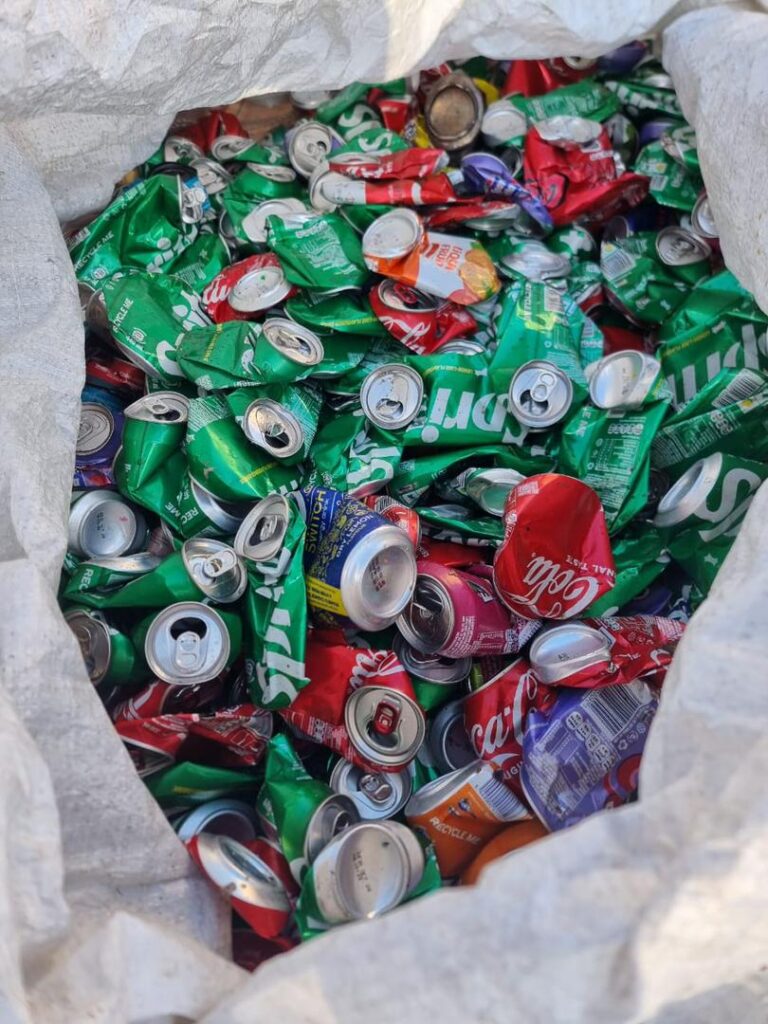
The Zimbabwe International Trade Fair attracts thousands of visitors each year—exhibitors, delegates, and members of the public. While this makes ZITF a powerful platform for economic growth, it also generates significant volumes of waste, much of which is recyclable. Common waste streams include PET plastic bottles, aluminum cans, plastic packaging (LDPE,HDPE) and cardboard materials. Without proper systems in place, these materials are often mixed and sent to landfill, resulting in lost recycling opportunities and increased environmental pressure.
The Solution: A Circular Approach
Through the Greening ZITF initiative, Green Hut introduced a structured waste separation and recycling system at the exhibition grounds. The goal was simple but powerful: Diverting recyclable materials from landfill and promote sustainable waste management practices.
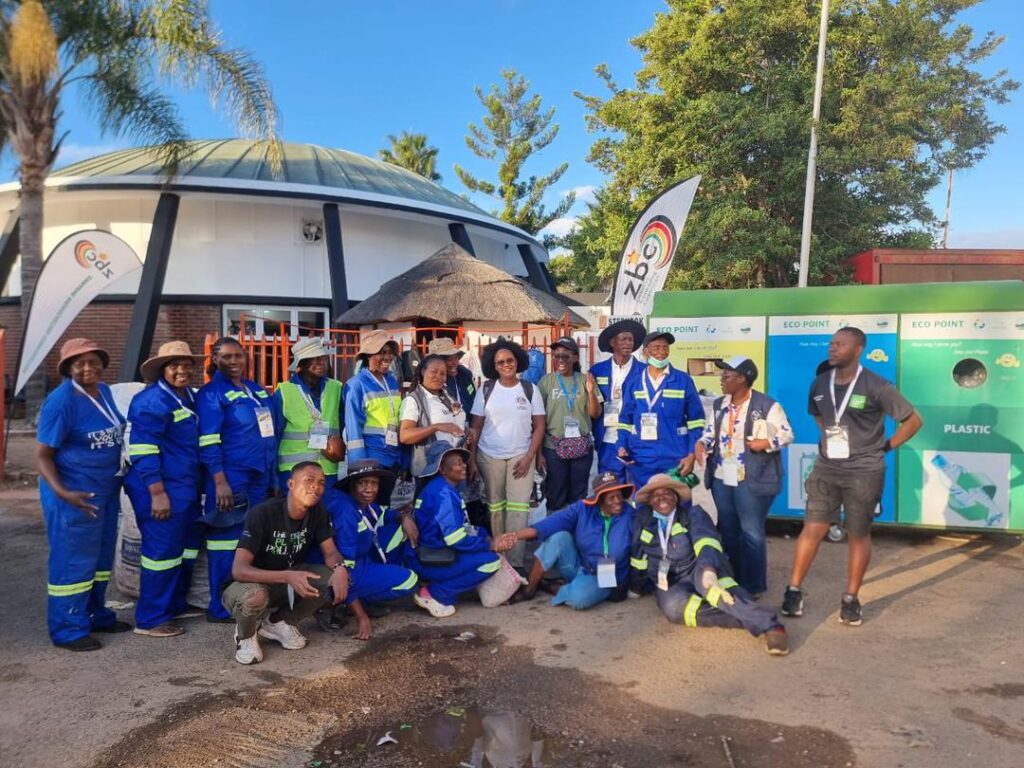
The initiative focused on establishing labelled recycling points , deploying a dedicated waste collection and sorting team, separating waste at source into key recycable streams and raising awareness among exhibitors and visitors. All collected materials were sorted, quantified, and redirected into formal recycling systems, ensuring that waste became part of a circular economy rather than an environmental burden
Powered by Partnerships
The success of the initiative was driven by collaboration.Green Hut worked alongside Catholic Commission for Justice and Peace (CCJP), Inyathi High School Environmental Club and Green Hut volunteers.Together, this diverse team brought energy, commitment, and purpose to the initiative.For the students from Inyathi High School, this was more than just volunteering—it was a hands-on learning experience. They actively participated in waste sorting, engaged with the public, and embodied what it means to practice sustainability, not just talk about it.
From Concept to Action: On-the-Ground Implementation
The initiative deployed a structured operational system that included:
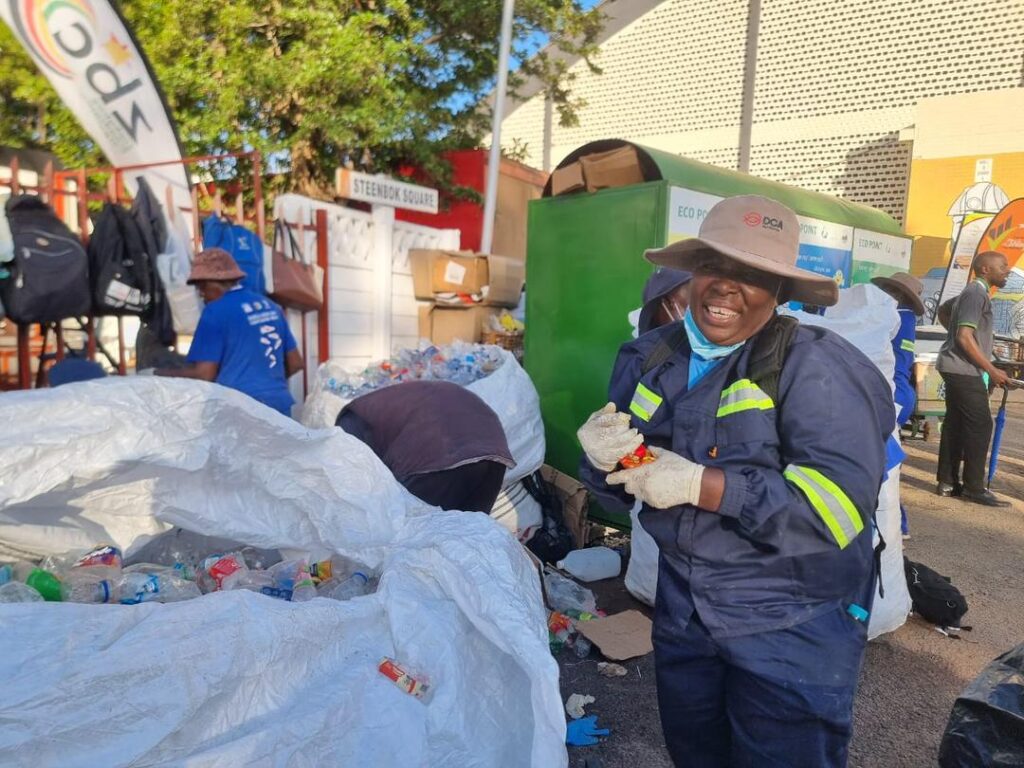
- -A trained waste recovery team working across the exhibition ground.
- -Strategically placed recycling bins and collection points
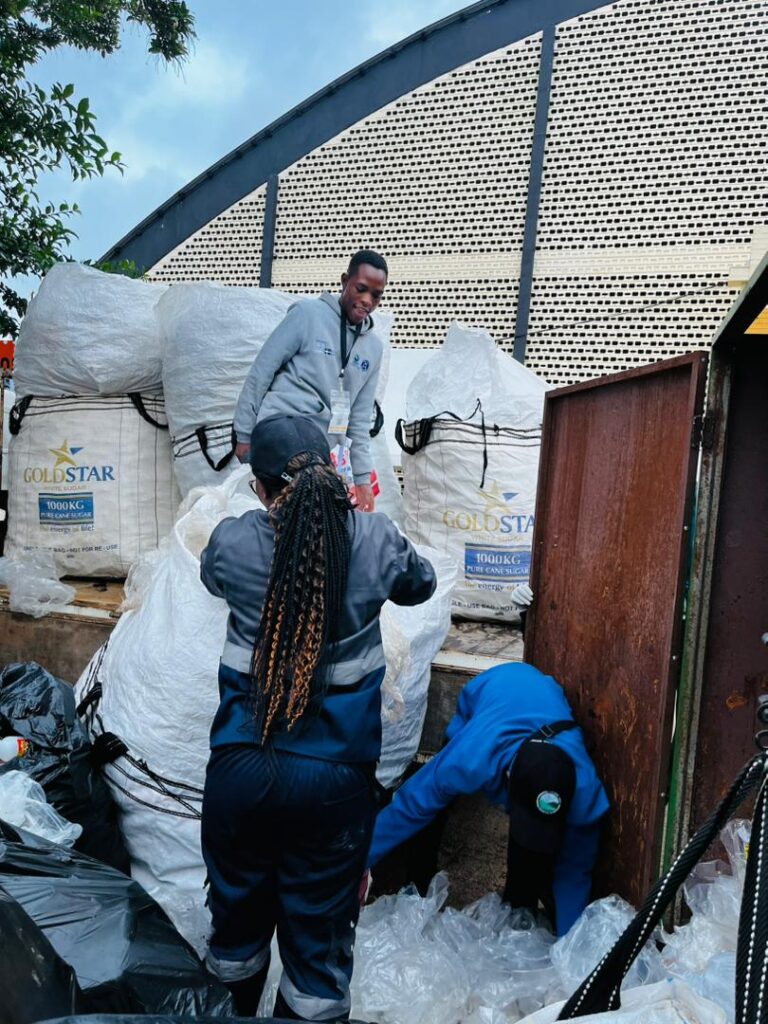
- -A temporary on-site sorting station
- -Continuous engagement with the public on responsible waste disposal
Beyond waste collection, the team also ensured cleanliness around high-traffic areas, real-time sorting and temporary storage of recyclables, data collection on waste volumes.Importantly, the initiative also prioritised the safety and dignity of waste collectors, providing protective equipment and support throughout the exhibition .
Changing Mindsets, One Interaction at a Time
One of the most powerful aspects of the Greening ZITF initiative was its public awareness component through conversations at recycling points and direct engagement with the exhibitors and visitors.The initiative sparked important conversations around waste, responsibility, and sustainability.While challenges were encountered particularly around inconsistent waste separation by some attendees there were also encouraging signs of change. Visitors began arriving with pre-sorted waste, curious to learn more and eager to participate.These moments reinforced the notion that behaviour change starts with awareness, but it grows through engagement.
Impact Beyond the Bins
By the end of the exhibition, the initiative had diverted significant quantities of recyclable waste from landfill, improved cleanliness across the ZITF grounds,increased awareness of recycling and waste separation, strengthened collaboration between civil society, youth, and partners and generated valuable data on waste streams at large events. But beyond the numbers, the real impact was in demonstrating that sustainable waste management at large events is not only possible—it is practical and scalable.
The Greening ZITF initiative was designed as a pilot model, with the potential to be replicated and scaled across Zimbabwe and beyond.
It lays the foundation for:
- Green event standards in Zimbabwe
- Stronger national recycling systems
- Increased adoption of circular economy practices
- Greater youth participation in environmental action
ZITF has now shown that it can be more than a trade fair—it can be a platform for sustainability leadership.
Looking Ahead
At Green Hut we believe that waste is not just something to be managed—it is something to be reimagined.The Greening ZITF initiative is a testament to what can happen when:
- Communities come together
- Young people take the lead
- Sustainability is put into action
As we look to the future, we remain committed to expanding this model, strengthening partnerships, and continuing to turn waste into opportunity.
Because in the end—
Yes, we can. And we did. ♻️