
Connecting Youth, Communities and Indigenous Knowledge Through Seed Sourcing
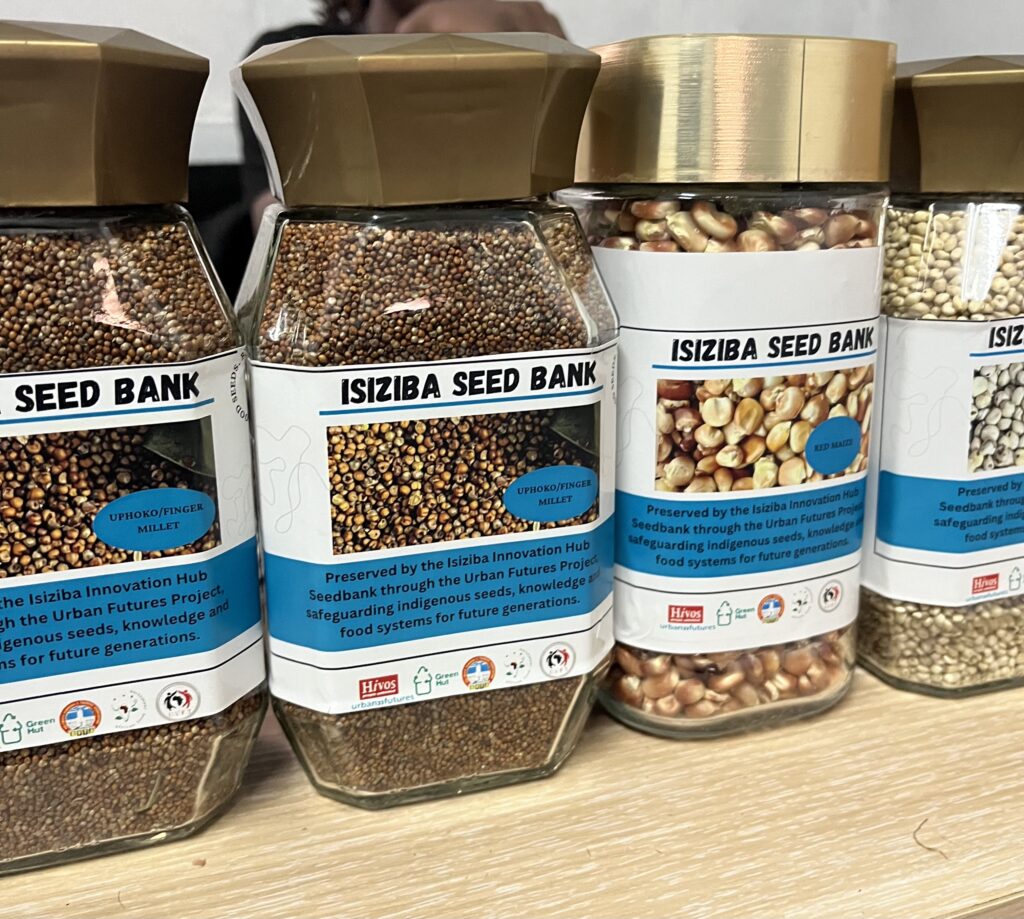
Seeds carry more than the promise of a harvest. They carry the stories, traditions, knowledge and wisdom of generations before us. Passed down from grandparents to farmers and from one generation to the next, indigenous seeds are deeply connected to our culture, heritage and food systems. Protecting and preserving these seeds is therefore not only about safeguarding food for today, but also about ensuring that future generations inherit the knowledge, diversity and resources that have sustained communities for generations. As part of the Urban Futures project the team travelled to the heart of Matobo District to engage directly with communities and learn more about the rich diversity of indigenous seeds found in the area. The journey provided an opportunity to learn from farmers and households who have cultivated, preserved and passed down these seeds over many years. Every household visited had a unique story to tell. Community members shared knowledge about the different types of indigenous seeds, their origins, uses, nutritional and agricultural value, as well as the traditional methods used to grow, harvest, dry and preserve them. These conversations offered a deeper appreciation of the knowledge embedded within our communities and highlighted that indigenous seeds are much more than agricultural inputs. They are living repositories of culture, history and resilience. The seed-sourcing exercise also provided an opportunity to acquire a variety of indigenous seeds for preservation at the isiziba youth innovation hub in Njube, Bulawayo. This forms part of a broader effort to connect traditional knowledge with youth-led innovation and create a space where young people can learn, experiment and develop practical solutions for more resilient and sustainable food systems. . The Isiziba Youth Innovation Hub is being developed by the Urban Futures project as an agri-food knowledge and innovation centre where young people can gain practical skills across different aspects of agriculture, food systems and sustainability. The hub is designed to provide hands-on learning opportunities, allowing young people to explore practices such as multi-storey gardening, raised-bed farming, hydroponics, food processing and value addition, while also promoting inclusivity, creativity and innovation. . Located in Njube, the hub is gradually coming to life. Its gardens are already thriving, a greenhouse has been established, and a hydroponics demonstration area is taking shape. Among the most exciting developments is the establishment of the Isiziba seedbank which will provide a dedicated space for preserving indigenous seeds and the knowledge associated with them. . The seeds sourced from Matobo will become part of this growing collection. Through the seedbank, young people will have the opportunity to see, learn about and engage with indigenous varieties that are often underrepresented in modern food systems. They will learn why these seeds matter not only for food and nutrition security, but also for biodiversity, climate resilience, cultural heritage and community self-reliance. . The learning will go beyond simply storing seeds. Young people will be introduced to the concept of seed sovereignty and encouraged to understand the importance of communities protecting, preserving and maintaining access to their own seed resources. The hub will also facilitate seed multiplication, giving young people practical experience in growing, harvesting, selecting and preserving seeds for future planting seasons. In this way, the seedbank will become more than a place where seeds are stored; it will be a living learning space where knowledge is shared, tested and passed on. . The journey from Matobo to Njube represents more than the movement of seeds from one place to another. It represents the transfer of knowledge, heritage and community wisdom from one generation to the next. By learning directly from communities, Urban Futures is creating opportunities for valuable indigenous knowledge to be shared with young people and adapted to urban environments. The Isiziba Youth Innovation Hub is therefore becoming a bridge between traditional knowledge and youth innovation, a space where young people can learn from the wisdom of the past while developing solutions for the food systems of the future. As the hub continues to grow, so too will its seedbank, gardens, demonstrations and learning opportunities. . The journey is only beginning, but every seed sourced, preserved and planted brings us one step closer to building food systems that are more diverse, resilient and rooted in our heritage.
Connecting Youth, Communities and Indigenous Knowledge Through Seed Sourcing Read More »