
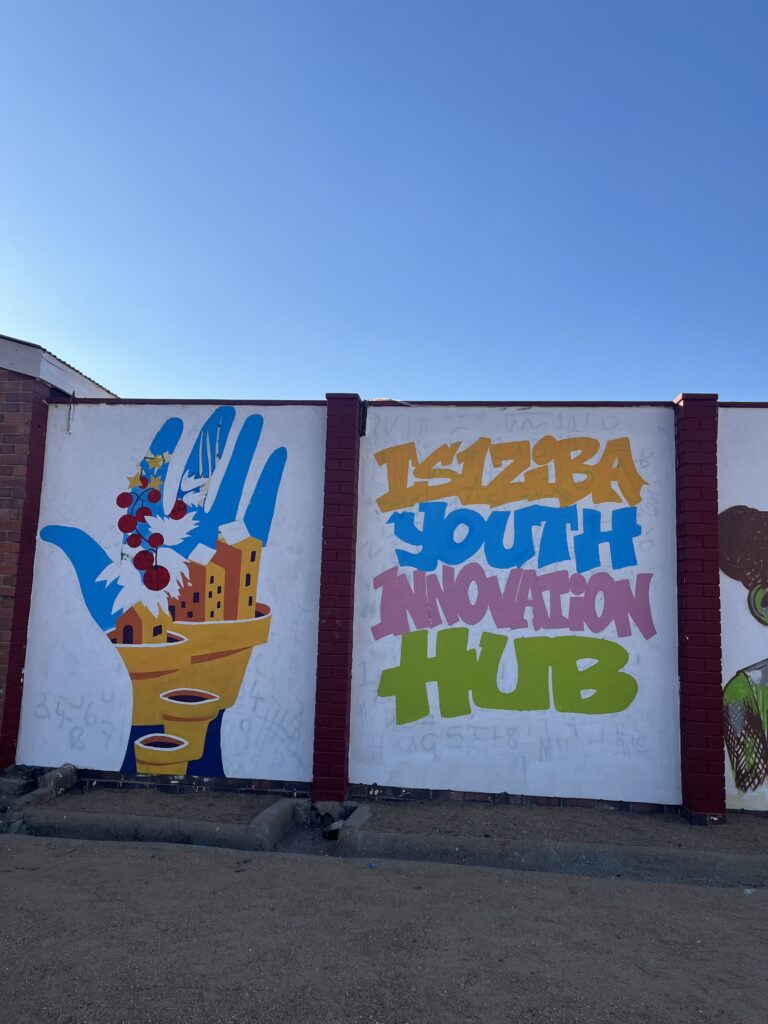
Isiziba Youth Innovation Hub: Home of Agri-Innovations
The Isiziba Youth Innovation Hub is steadily taking shape as a vibrant space for learning, creativity and innovation. From raised beds and a seed bank to vertical gardens and a greenhouse, the various features of the hub are coming together as it prepares for its official launch in September. The hub is envisioned as a home for young people, a space where they can come together to learn, unlearn and develop innovative solutions that can contribute to improved urban food systems. It is being developed through a partnership between the City of Bulawayo and the Urban Futures Project, a project which seeks to strengthen youth participation in urban food systems while contributing to the development of climate-resilient and sustainable urban food systems. The Urban Futures Project is being implemented in Bulawayo and Mutare through a consortium of four partners: Greenhut, Unemployed and Vulnerable Foundation Trust, African Food Revolution, and the Bulawayo Vendors and Traders Association, which serves as the lead partner. The project is funded by HIVOS. Once fully operational, the Isiziba Youth Innovation Hub will serve as a source of knowledge, creativity, opportunities and practical solutions for young people. A greenhouse has already been established and will provide a space for demonstrations and hands-on learning in areas such as hydroponics and vertical farming. A demonstration garden has also been established to showcase various sustainable food production practices, including multistorey gardens, raised beds and intercropping. These approaches are designed to demonstrate practical ways of building resilient urban food systems while creating a more sustainable future. Inclusivity has also been incorporated into the design and development of the hub, ensuring that the space and its activities can be accessed and enjoyed by everyone, including persons with disabilities. Among the innovative features at the hub are multistorey gardens, which demonstrate how small spaces can be transformed into highly productive growing areas. Each multistorey garden can accommodate up to 80 plants, compared to approximately 14 plants in a conventional garden occupying a similar amount of space. The gardens also promote efficient water use, as water draining from the upper levels can benefit plants growing on the lower levels. The raised layers of the multistorey gardens can also improve accessibility by making planting, watering and harvesting easier. In keeping with the hub’s commitment to sustainability and innovation, one of the multistorey gardens was constructed using recycled PET bottles. This demonstrates the principles of a circular economy, where waste materials can be transformed into useful and productive resources. Raised beds have also been incorporated into the hub, with disability inclusion being an important consideration in their design. Their height and structure make them more accessible to people who use wheelchairs, helping to ensure that more young people can actively participate in gardening and other activities at the hub. The hub is also home to a diverse range of plants, including vegetables such as covo, spinach and tsunga, as well as trees such as waterberry and umvebe. Lemon trees, herbs and edible flowers have also been incorporated into the space. Together, these different plant species contribute to a biodiverse and ecosystem friendly environment while creating valuable opportunities for young people to learn about sustainable food production and biodiversity. Another important feature currently being developed is the seed bank, which will help preserve indigenous seeds while educating young people about the importance of seed sovereignty. The seed bank will house a variety of indigenous and locally adapted seeds, including white sorghum, red cob maize, red maize, groundnuts, round nuts and okra, among others. The seeds will be sourced from rural communities, creating an opportunity for knowledge exchange between young people and communities with longstanding experience in seed preservation. Young people will learn about traditional seed preservation methods and the importance of conserving indigenous seed varieties. Seed multiplication initiatives will also be conducted periodically to support the continued availability and preservation of these important resources. Through its focus on innovation, sustainability, biodiversity, climate resilience and inclusion, the hub is creating opportunities for young people to actively participate in shaping the future of their communities. As the different components of the hub continue to take shape, Isiziba is set to become a space where knowledge is shared, ideas are transformed into practical solutions and young people are empowered to contribute to more resilient and sustainable urban food systems.
Isiziba Youth Innovation Hub: Home of Agri-Innovations Read More »